

One of the biggest fears people have after hearing the words “You have kidney disease” is…
“Doctor, will I definitely end up on dialysis?”
Does every kidney patient end up on dialysis?
The answer is reassuring:
No. Not every kidney patient needs dialysis.
In fact, most people with chronic kidney disease (CKD) do not immediately require dialysis, and many may never need it at all.
Dialysis is usually required only when the kidneys have lost almost all of their function—typically less than 10–15% of normal kidney function—and they can no longer remove enough waste products and excess fluid from the body.
The goal of treatment is to slow or even stop the progression of kidney disease for as long as possible.
Today, we have much better treatments than ever before.
Good control of blood pressure and diabetes, reducing protein leakage in the urine, stopping smoking, maintaining a healthy weight, exercising regularly, eating a kidney-friendly diet, and taking newer kidney-protective medicines such as ACE inhibitors, ARBs, SGLT2 inhibitors, and finerenone (when appropriate) can significantly delay kidney failure in many patients.
Some patients maintain stable kidney function for 10, 20 years or even longer, especially when kidney disease is detected early and treated properly.
Even if kidney disease progresses, it usually happens gradually, giving your nephrologist time to prepare you for the next steps.
If dialysis eventually becomes necessary, remember…
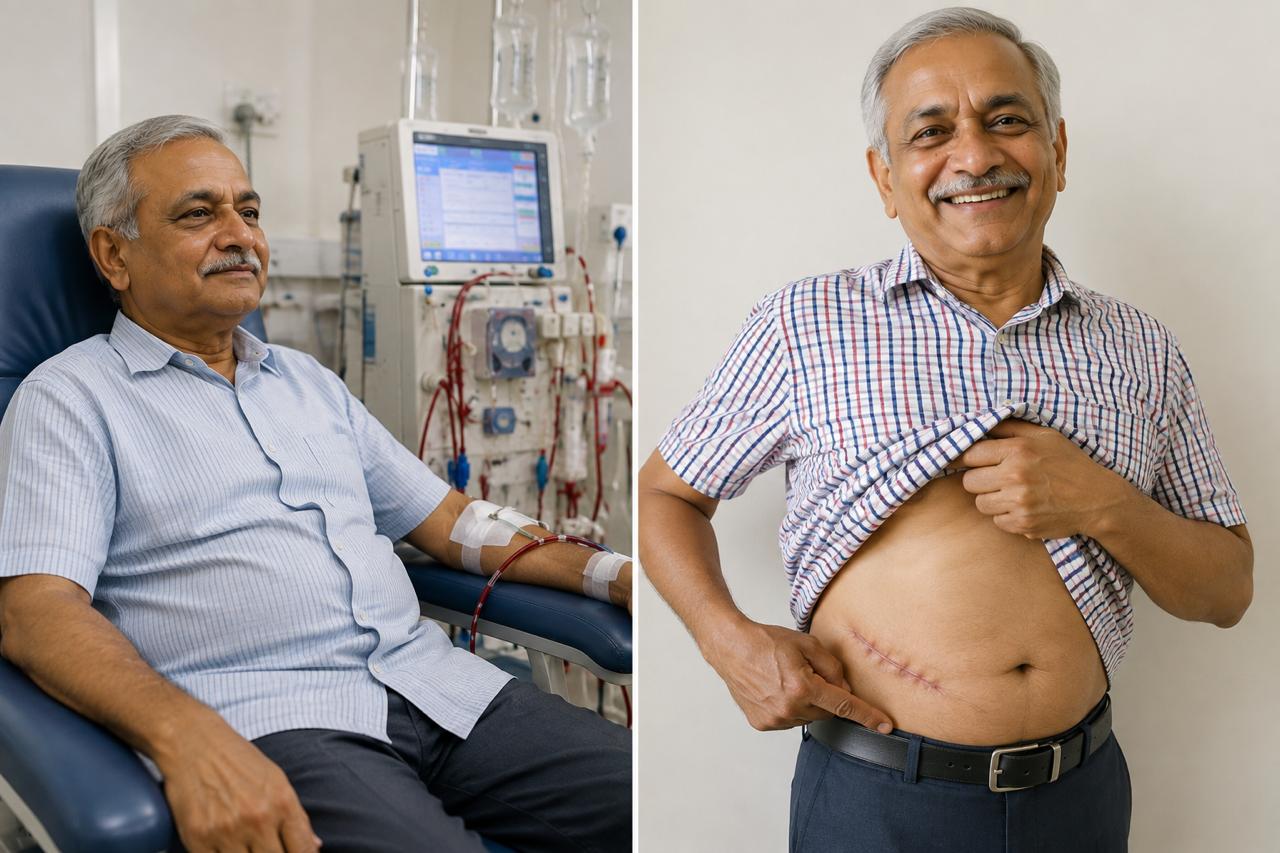
Dialysis is a treatment—not a failure.
It replaces part of the work of the kidneys and helps people live longer, healthier lives. Many patients continue to work, travel, attend family functions, and enjoy life while on dialysis.
What can you do today to protect your kidneys?
And for many suitable patients, kidney transplantation offers the best long-term treatment, restoring independence and giving them a second chance at life.
Remember
A diagnosis of kidney disease does not mean a life sentence to dialysis.
The earlier kidney disease is detected, the more we can do to protect your kidneys.
Regular follow-up, the right medicines, healthy food, exercise, and a positive attitude can make an enormous difference.
One message to remember…
Don’t ask, “Will I need dialysis?”
Remember
Ask instead,
“What can I do today to protect my kidneys?”
That one question can change your future.
More Blogs

23 August, 2026
Hemodialysis or Peritoneal Dialysis—Which Is Better?
When someone is told they need dialysis, one of the first questions is: “Should I choose hemodialysis or peritoneal dialysis?” The answer is simple. There…

23 August, 2026
Foods That Help Prevent Urinary Tract Infections (UTIs)
Healthy Food Choices for a Healthy Urinary Tract A healthy diet cannot cure a UTI, but it can help reduce the risk of infections by…