


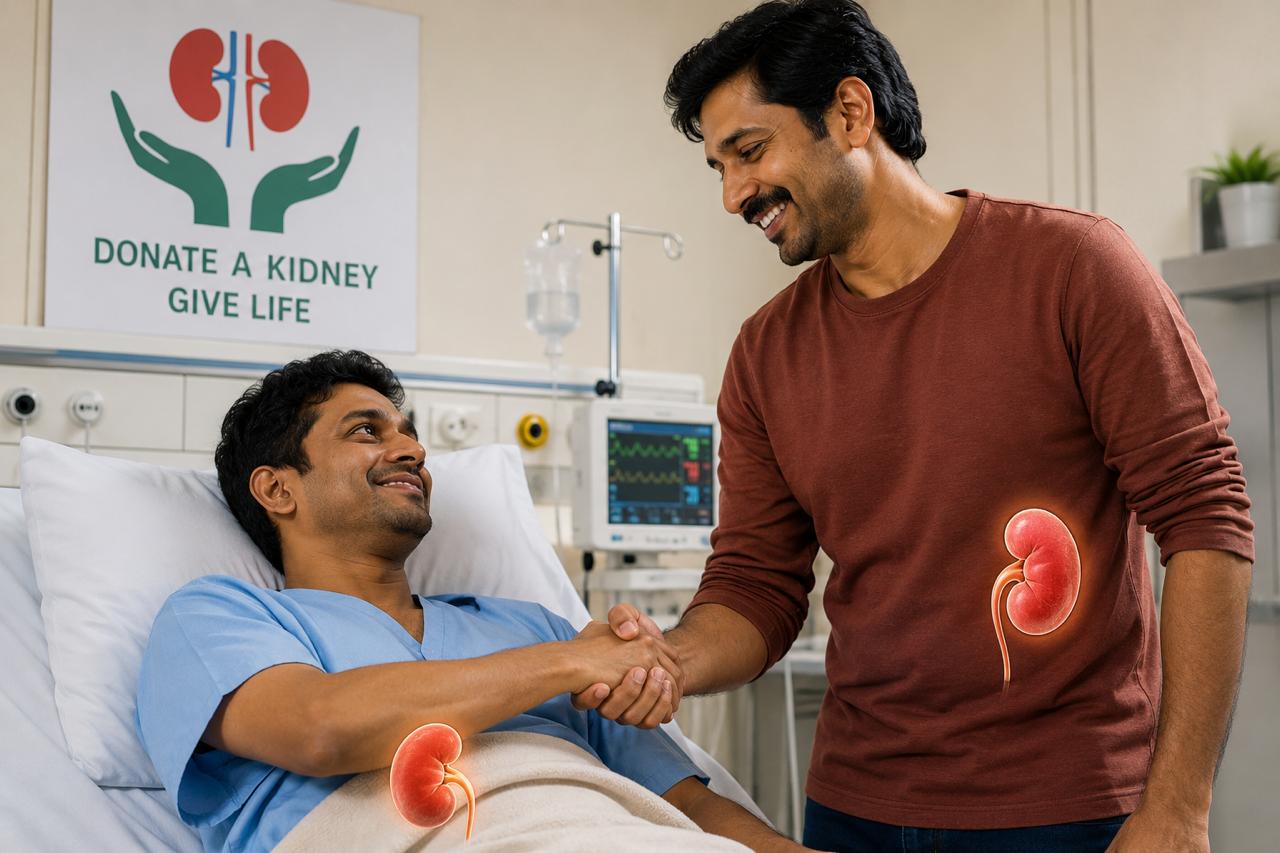
When a patient is told they need a kidney transplant, one question almost always follows:
“Should I wait for a deceased donor kidney… or accept a kidney from a living donor?”
The truth is…
Both save lives.
Why can a living donor transplant be advantageous?
But if you have a healthy, willing, and medically suitable living donor, a living donor transplant usually offers the best long-term results.
Why?
Because the kidney comes from a healthy person, the surgery can be planned, and the kidney spends very little time outside the body. As a result, it usually starts working immediately, has a lower chance of delayed function, and, on average, lasts longer.
Many living donor kidneys continue to function for 15 to 20 years or even longer.
What about a deceased donor kidney?
A deceased donor kidney is also a remarkable gift.
It comes from someone whose final act of generosity gives another person a second chance at life.
For patients who do not have a living donor, it is often the best—and sometimes the only—option.
Deceased donor kidneys usually function well, but because they are retrieved after death, transported, and preserved before transplantation, they are more likely to take a little longer to “wake up.” On average, they function for 10 to 15 years, although many last much longer.
Should you choose a deceased donor kidney?
So, does that mean you should never choose a deceased donor kidney?
Absolutely not.
A deceased donor transplant is still far better than remaining on long-term dialysis. It offers better survival, greater freedom, improved quality of life, and the opportunity to return to work, travel, and enjoy life again.
The most important mistake patients make is waiting for the “perfect” kidney while becoming weaker on dialysis.
Remember
Remember…
The best kidney is not always the perfect kidney.
It is the right kidney at the right time.
If you have a suitable living donor, that is usually the best choice.
If you don’t, register for a deceased donor transplant and stay healthy while you wait.
Because whether the kidney comes from a loving family member or the extraordinary gift of organ donation after death…
Every kidney transplant is a second chance at life
More Blogs

23 August, 2026
“My Mother Has Kidney Disease… Can She Still Live a Healthy Life?”
This is one of the most common—and most emotional—questions we hear in the clinic. A son quietly asks… “Doctor… my mother has kidney disease. Will…

23 August, 2026
What Should Your Blood Pressure Target Be?
One of the most common questions I hear is, “Doctor, my blood pressure is 135/85. Is that good or bad?” The answer is… It depends…