

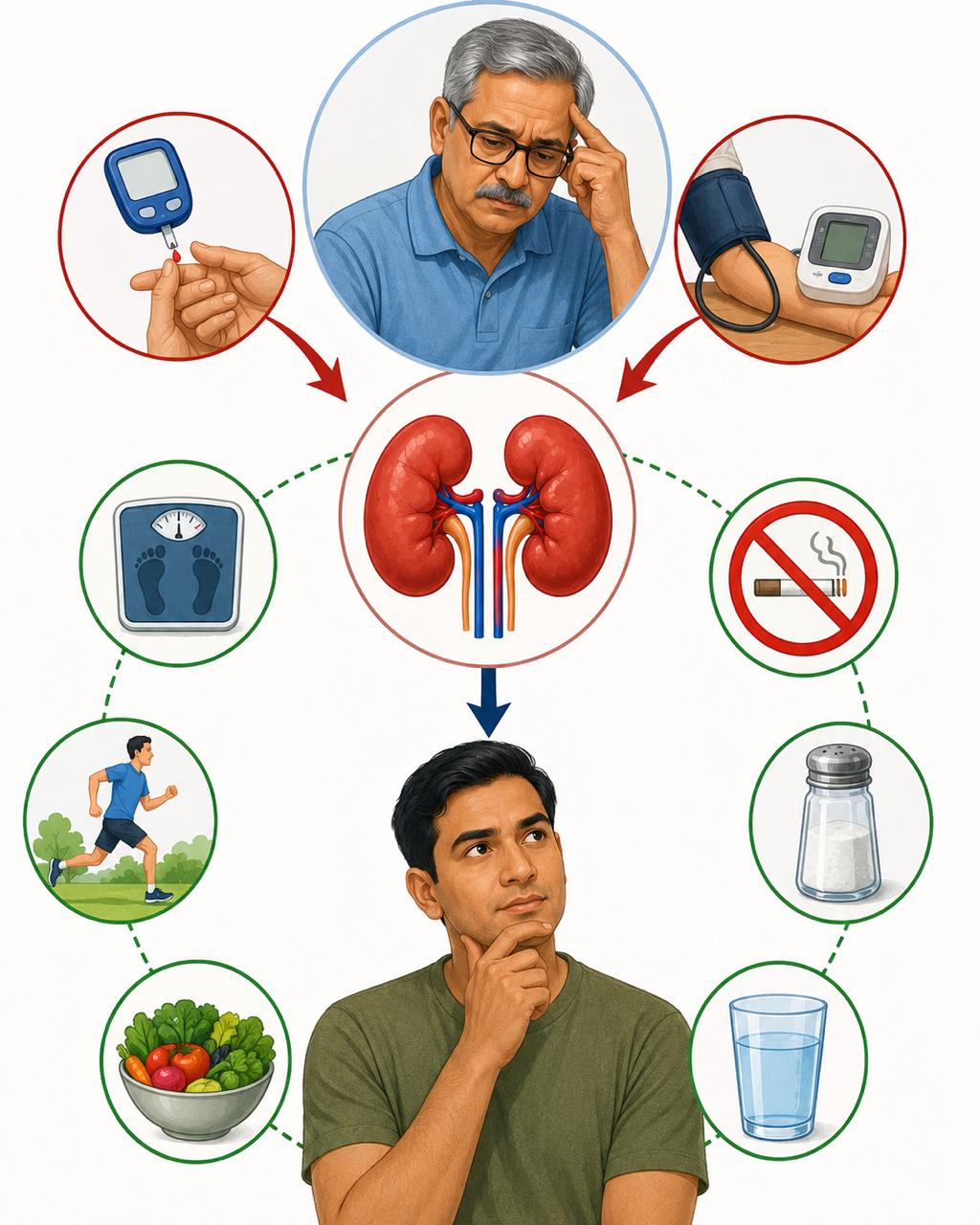
Count the Salt. Protect the Kidney.
Salt may look harmless, but too much salt increases blood pressure, causes swelling and makes your kidneys work harder. Cutting down salt is one of the simplest ways to protect your kidneys and heart.
HOW MUCH SALT IS SAFE?
How much salt should you have?
For most healthy adults and people trying to prevent high blood pressure and kidney disease:
Aim for less than 5 grams of salt per day.
That is approximately 1 teaspoon of salt for the ENTIRE DAY — including the salt used while cooking.
Remember:
5 grams salt ≈ 2 grams sodium
And salt is not only what you add at the dining table. Pickles, papad, chips, packaged foods, sauces, instant foods and restaurant meals can contain a lot of hidden salt.
I HAVE CKD. HOW MUCH SALT CAN I TAKE?
Who may need a lower salt intake?
For most people with Chronic Kidney Disease (CKD):
Keep salt below 5 grams/day.
Your doctor may recommend an even lower intake if you have:
High blood pressure
Swelling of the legs or face
Heart failure
Significant fluid retention
Reducing salt can help control blood pressure, swelling and thirst and may also improve the effectiveness of BP medicines.
The key message
WHAT ABOUT DIALYSIS?
Salt restriction becomes even more important on dialysis.
More salt → More thirst → More water intake → More weight gain between dialysis sessions
This can lead to swelling, breathlessness, high BP and difficulty removing excess fluid during dialysis.
Target: generally less than 5 grams of salt/day, individualized by your kidney/dialysis team.
More Blogs
23 August, 2026
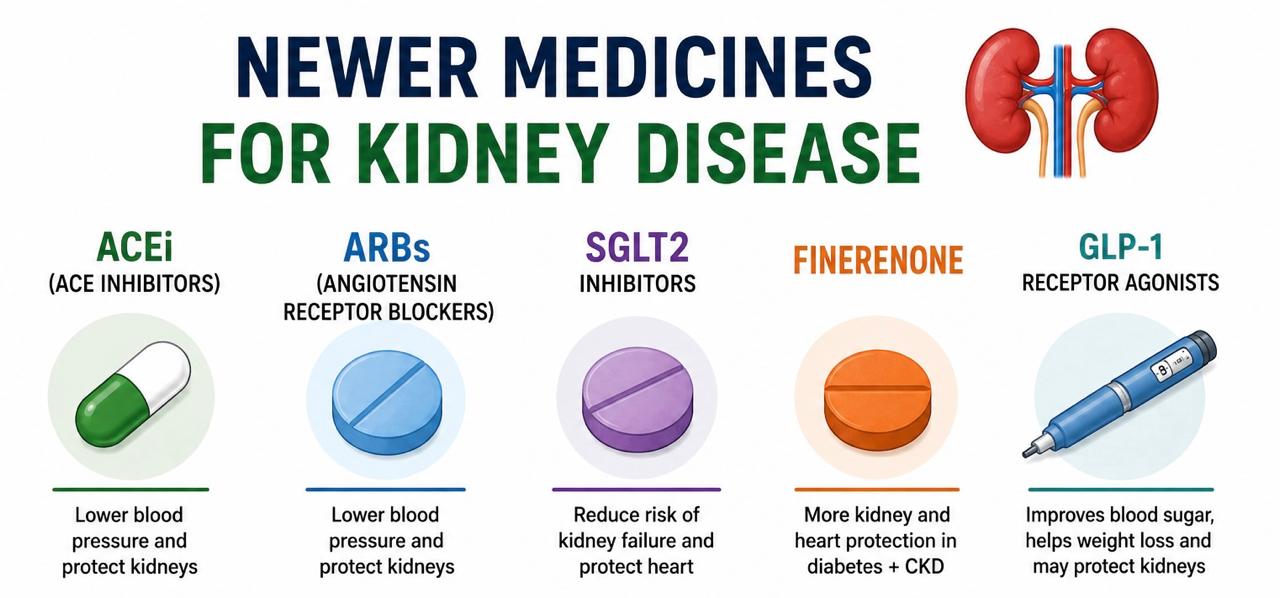
“Newer medicines for kidney disease – A new era of hope”
Not long ago, when someone was diagnosed with chronic kidney disease, our main aim was simply to slow the damage. Medicines that protect the kidneys…

23 August, 2026
Foods That Help Prevent Urinary Tract Infections (UTIs)
Healthy Food Choices for a Healthy Urinary Tract A healthy diet cannot cure a UTI, but it can help reduce the risk of infections by…