


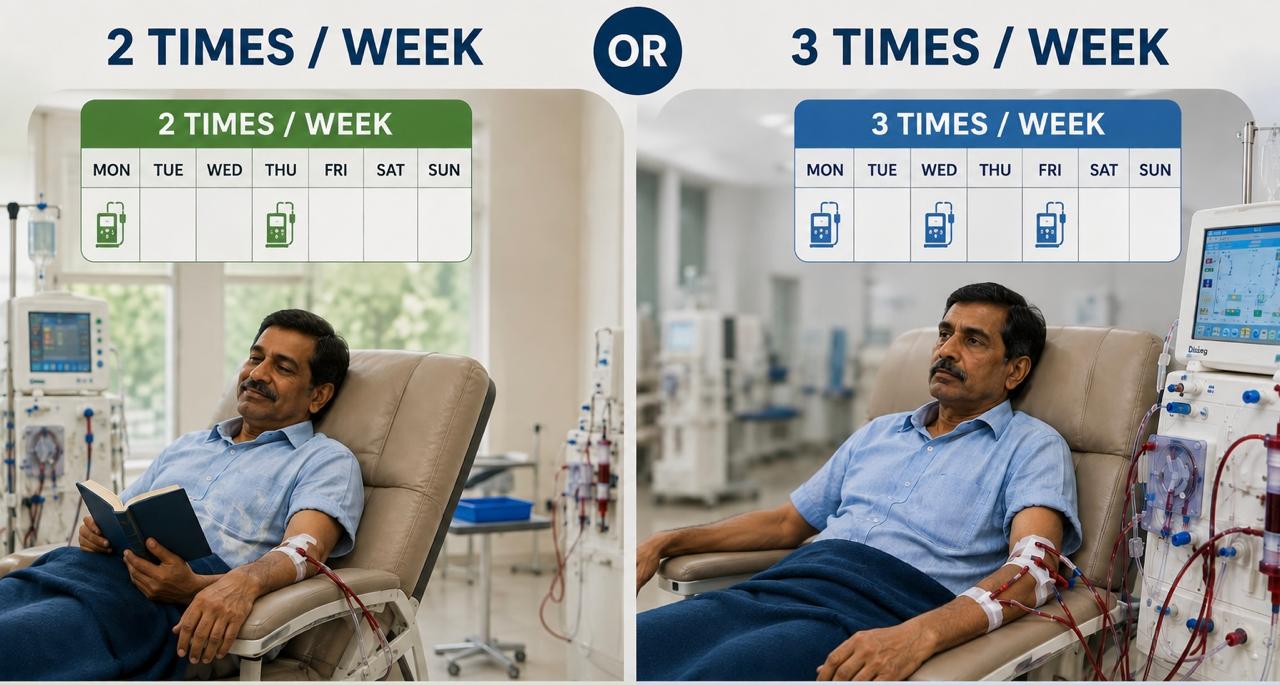
One of the most common questions patients ask is:
“Doctor, can I manage with dialysis only twice a week?”
The answer is…
Sometimes yes. But not for everyone.
The purpose of dialysis is not simply to remove water.
It is to remove toxins, balance minerals, control blood pressure, and help you feel well.
When can twice-weekly dialysis be appropriate?
Some patients who have recently started dialysis still have good residual kidney function. Their own kidneys continue to produce urine and remove some toxins. In carefully selected patients like these, twice-weekly dialysis may be safe—for a period of time—with close monitoring.
But kidney function usually continues to decline.
As this happens, twice-weekly dialysis may no longer be enough.
Waste products begin to build up.
Fluid accumulates.
Potassium rises.
Patients become tired, breathless, swollen, lose their appetite, and may develop serious complications.
Why do many patients need dialysis three times a week?
That is why most patients eventually need dialysis three times a week.
Studies have consistently shown that adequate dialysis improves survival, reduces hospital admissions, and helps patients feel better.
Choosing fewer dialysis sessions simply for convenience or cost may lead to inadequate dialysis and poorer health.
The decision should never be based on habit or finances alone.
It should be based on your health.
What will your nephrologist consider?
Your nephrologist will consider:
- Your remaining kidney function
- How much urine you still produce
- Your blood test results
- Fluid gain between dialysis sessions
- Your symptoms
- Your overall nutritional status
Remember
Remember…
Dialysis is not about counting sessions.
It’s about getting enough dialysis for your body.
Some people can safely begin with twice a week.
Many will eventually require three sessions a week.
The right schedule is the one that keeps you healthy, energetic, and free from the complications of under-dialysis.
Your dialysis prescription should always be individualized—not standardized
More Blogs
23 August, 2026
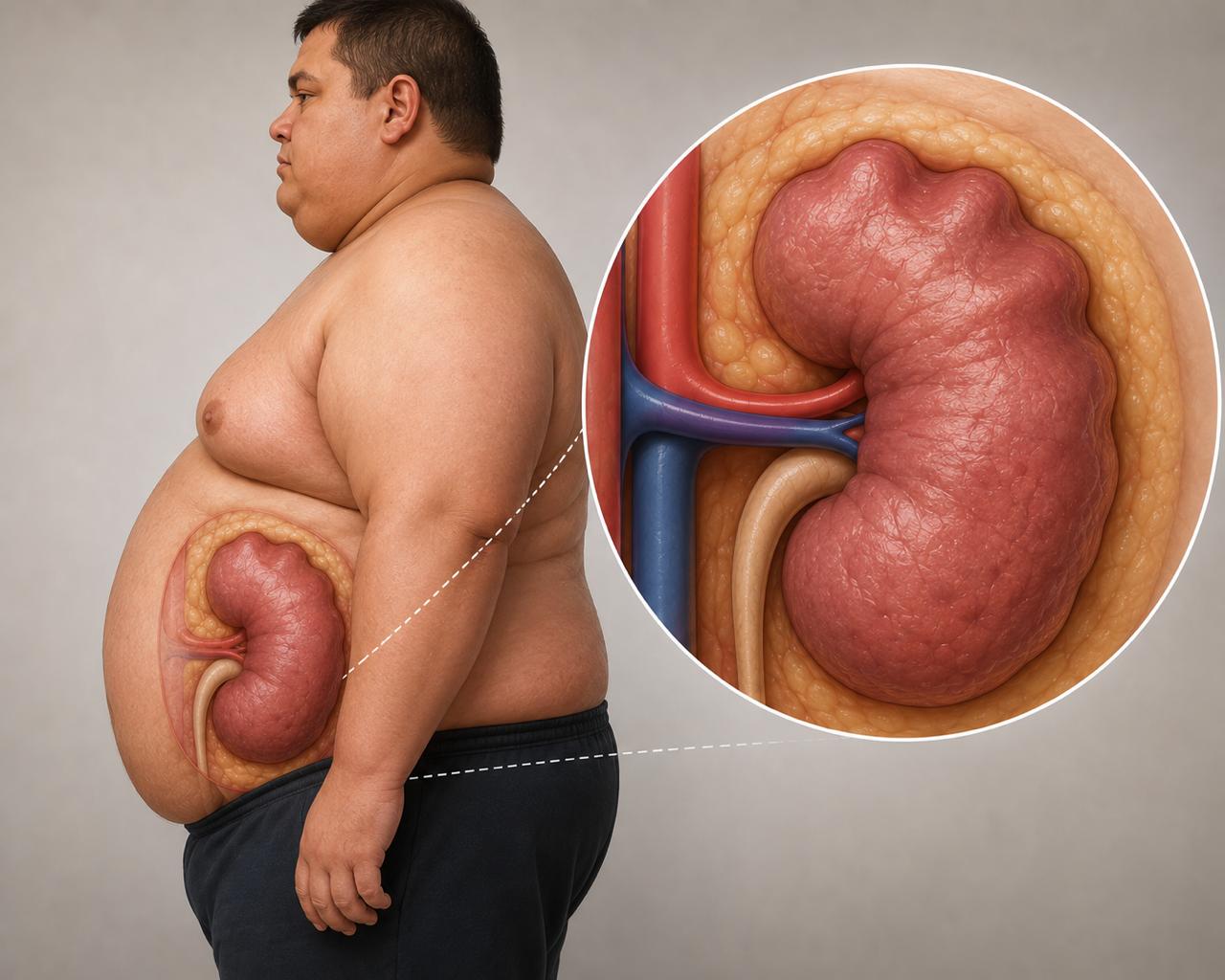
Overweight & Kidney Disease
Your Kidneys Are Carrying More Than You Think Why does excess weight affect the kidneys? When people gain weight, they often worry about their appearance.…

23 August, 2026
Can I Donate My Kidney?
The answer is… Yes—if you’re healthy enough to donate safely. A healthy person can live a normal, active life with just one kidney. Thousands of…