

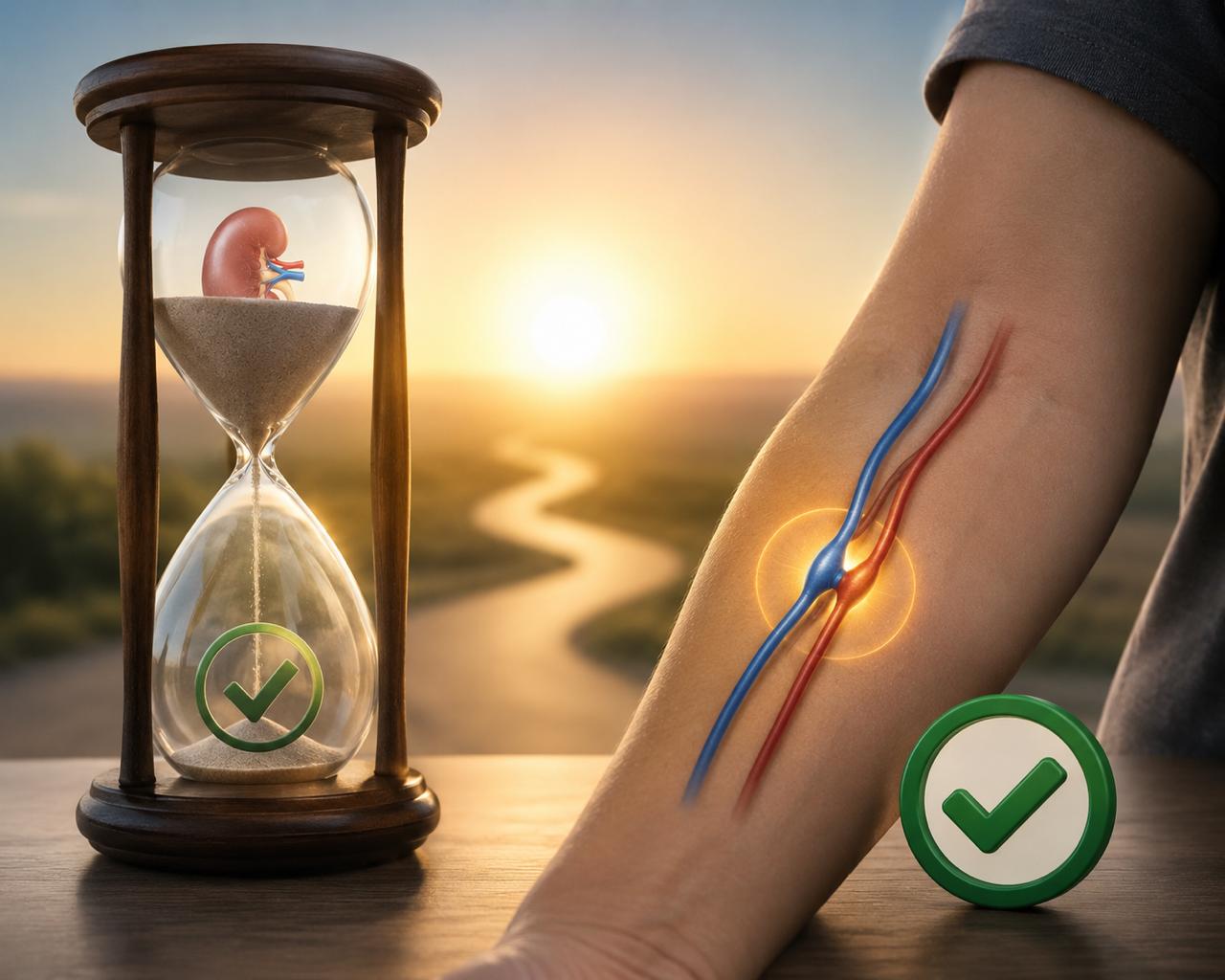
A Silent Journey… That Can Be Changed
Chronic Kidney Disease (CKD) doesn’t develop overnight.
The 5 Stages of Kidney Disease
It usually progresses slowly over many years, often without causing any pain or warning signs. In fact, many people lose more than half of their kidney function before they realize something is wrong.
The good news?
Stage 1 – Kidney Damage Begins
Kidney disease can often be slowed down—and sometimes its progression can be dramatically delayed—if it is detected early.
The stages of kidney disease are based on the eGFR (estimated Glomerular Filtration Rate), which tells us how well the kidneys are filtering the blood.
Stage 1 – Kidney Damage Begins
- eGFR ≥90 mL/min
At this stage, kidney function is still normal, but the kidneys are not completely healthy.
Stage 2 – Mild Loss of Kidney Function
There may be:
Protein leaking into the urine
Blood in the urine
Stage 3 – Moderate Kidney Disease
Structural abnormalities seen on ultrasound
Early damage from diabetes, high blood pressure, or inherited kidney disease
- Most people feel perfectly well.
- What should you do?
- This is the best stage to stop further damage.
- ✔️ Control diabetes and blood pressure.
- ✔️ Stop smoking.
- ✔️ Avoid unnecessary painkillers.
- ✔️ Maintain a healthy weight.
✔️ Treat protein leakage early.
Stage 2 – Mild Loss of Kidney Function
eGFR 60–89 mL/min
Stage 4 – Severe Kidney Disease
The kidneys are beginning to lose filtering ability, but they still perform most of their work.
Most patients have no symptoms whatsoever.
- This is why CKD is often called the silent disease.
- What should you do?
- Continue protecting your kidneys.
- This is the stage where lifestyle changes and kidney-protective medicines can have a tremendous impact on your future.
- Stage 3 – Moderate Kidney Disease
- eGFR 30–59 mL/min
- This is often the stage when kidney disease is finally discovered.
- Some patients develop:
Swelling of the feet
Tiredness
High blood pressure
Anemia
Changes in urine
Mild electrolyte abnormalities
The kidneys are now working at only 30–60% of normal capacity.
Stage 5 – Kidney Failure
What should you do?
This is the most important stage to prevent kidney failure.
- Your nephrologist may:
- Start or optimize ACE inhibitors, ARBs, SGLT2 inhibitors, or finerenone where appropriate.
- Treat anemia and bone disease.
- Recommend dietary changes.
- Monitor kidney function regularly.
- Many patients remain in Stage 3 for many years with proper treatment.
- Stage 4 – Severe Kidney Disease
- eGFR 15–29 mL/min
- The kidneys are now working at less than one-third of their normal function.
- Waste products begin accumulating in the body.
Symptoms may include:
Poor appetite
Nausea
Persistent tiredness
- Itching
- Swelling
- Breathlessness
- Difficult-to-control blood pressure
- What should you do?
- This is the time to prepare—not panic.
- Discuss:
- Dialysis options
- AV fistula creation
Kidney transplant evaluation
Vaccinations
Nutritional optimization
Planning ahead allows dialysis or transplantation to begin safely if required.
Stage 5 – Kidney Failure
eGFR <15 mL/min The kidneys can no longer adequately remove waste products or excess fluid. Some patients develop: Severe fatigue Loss of appetite Vomiting Breathlessness Fluid overload Dangerous electrolyte disturbances Many patients will need: Hemodialysis Peritoneal dialysis
Or, ideally, a kidney transplant if suitable.
But remember…
Stage 5 is not the end of life.
Today, thousands of people on dialysis continue to work, travel, exercise, raise families, and enjoy life.
Many transplant recipients go back to living almost completely normal lives.
The Message Every Family Should Remember
Kidney disease is not simply about the eGFR number.
The key message
It is about finding the disease early enough to change its course.
The earlier kidney disease is detected, the greater the chance of preventing kidney failure.
If you have diabetes, high blood pressure, heart disease, obesity, or a family history of kidney disease, ask for simple screening tests every year.
A blood test (serum creatinine), a urine test for protein, and an ultrasound when needed can detect kidney disease years before symptoms appear.
Remember…
CKD has five stages—but it doesn’t have to reach Stage 5.
Early detection. Early treatment. Better kidneys. Better life
More Blogs
23 August, 2026
Kidney Stones Can Be Prevented
Most kidney stones do not happen overnight. They develop slowly over months or years. Most stones can be prevented with the right diet, enough water,…

23 August, 2026
Can I Live Well on Dialysis?
One of the greatest fears I hear from patients is: “If I start dialysis… is my life over?” My answer is always the same. No.…