


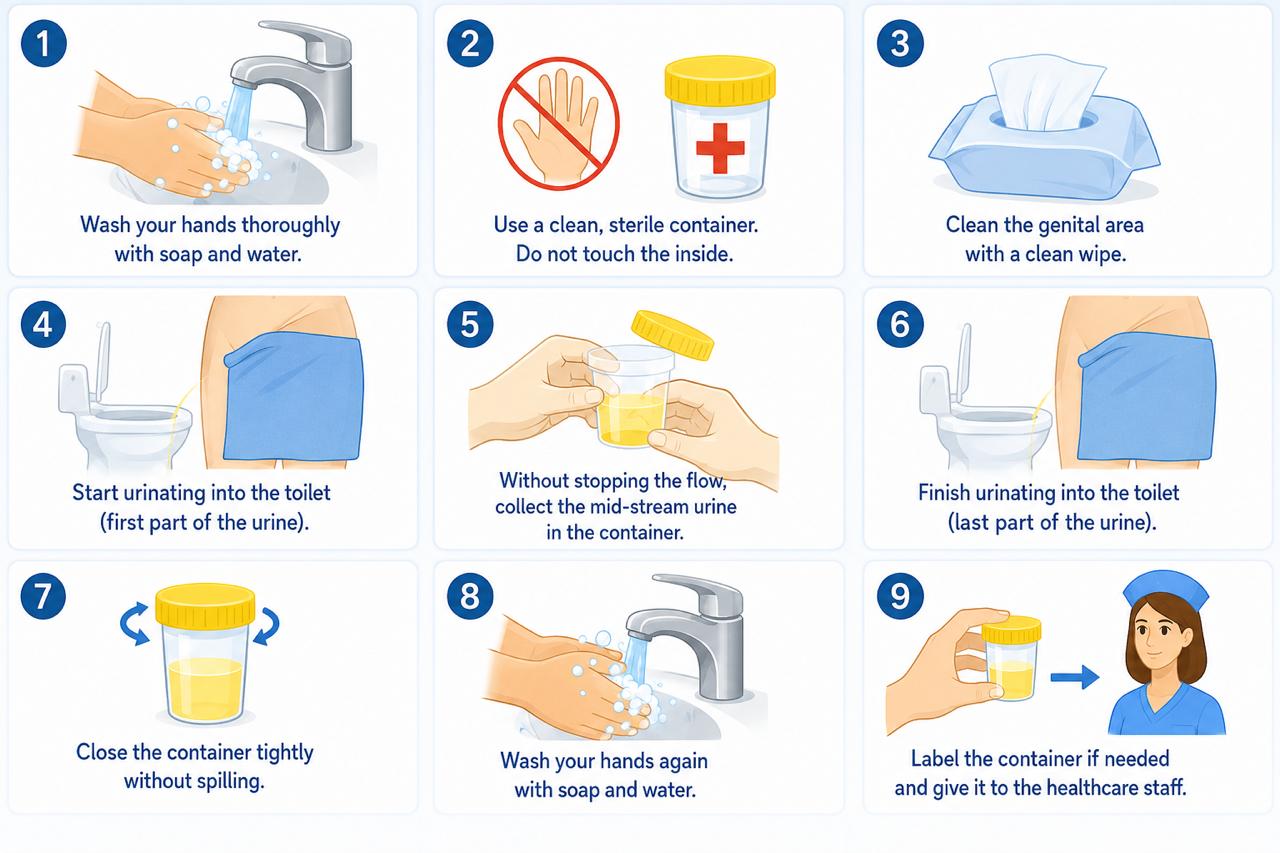
Many urine tests, especially urine cultures, are only as accurate as the way the urine sample is collected.
If the sample is contaminated by bacteria from the skin or genital area, the report may be misleading and could result in unnecessary antibiotics or repeated testing.
How to collect a clean midstream urine sample
Here’s how to collect a clean midstream urine sample correctly:
Step-by-step collection
Step 1: Wash your hands
Wash your hands thoroughly with soap and water.
Step 2: Clean the genital area
Before passing urine, gently clean the genital area with clean water or a cleansing wipe if provided.
Women: Separate the folds of skin (labia) and wipe from front to back.
Men: If uncircumcised, gently pull back the foreskin and clean the tip of the penis.
Step 3: Start urinating
Begin passing urine into the toilet.
Step 4: Collect the middle portion
After the first few seconds, without stopping the flow, place the sterile urine container into the stream and collect the middle portion of urine.
Do not allow the container or its lid to touch your skin or genital area, and do not touch the inside of the container.
Step 5: Finish urinating
Pass the remaining urine into the toilet.
Step 6: Close and send the sample
Remember
Close the lid tightly, wash your hands again, and give the sample to the healthcare staff as soon as possible—ideally within 1 hour. If there is any delay, keep the sample refrigerated if advised.
Remember
A clean midstream urine sample gives the most accurate results for urine infection, protein, blood, and other urine tests.
Taking an extra minute to collect the sample properly can prevent incorrect results, unnecessary antibiotics, and repeat testing
More Blogs
23 August, 2026
Kidney Stones Can Be Prevented
Most kidney stones do not happen overnight. They develop slowly over months or years. Most stones can be prevented with the right diet, enough water,…
23 August, 2026
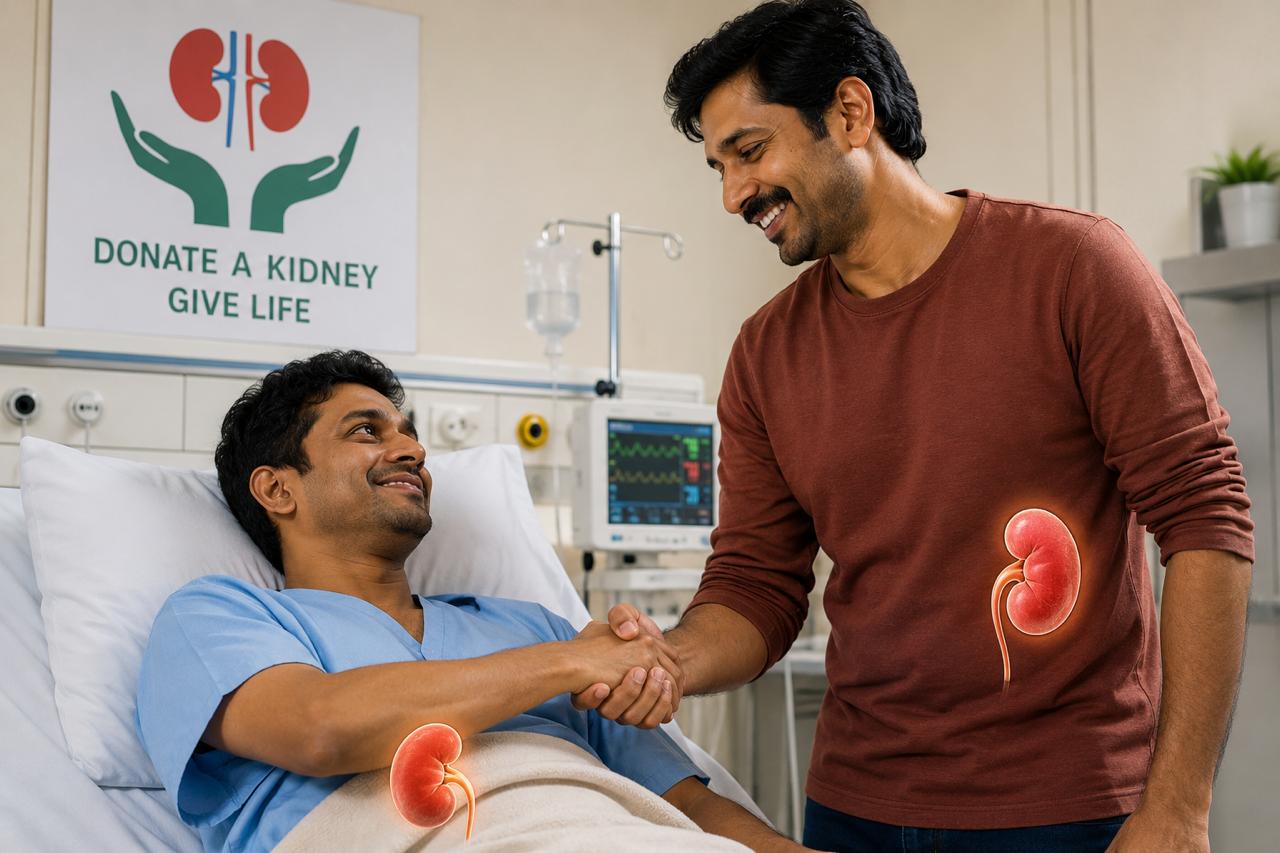
Living Donor or Deceased Donor Kidney Transplant—Which Is Better?
When a patient is told they need a kidney transplant, one question almost always follows: “Should I wait for a deceased donor kidney… or accept…