


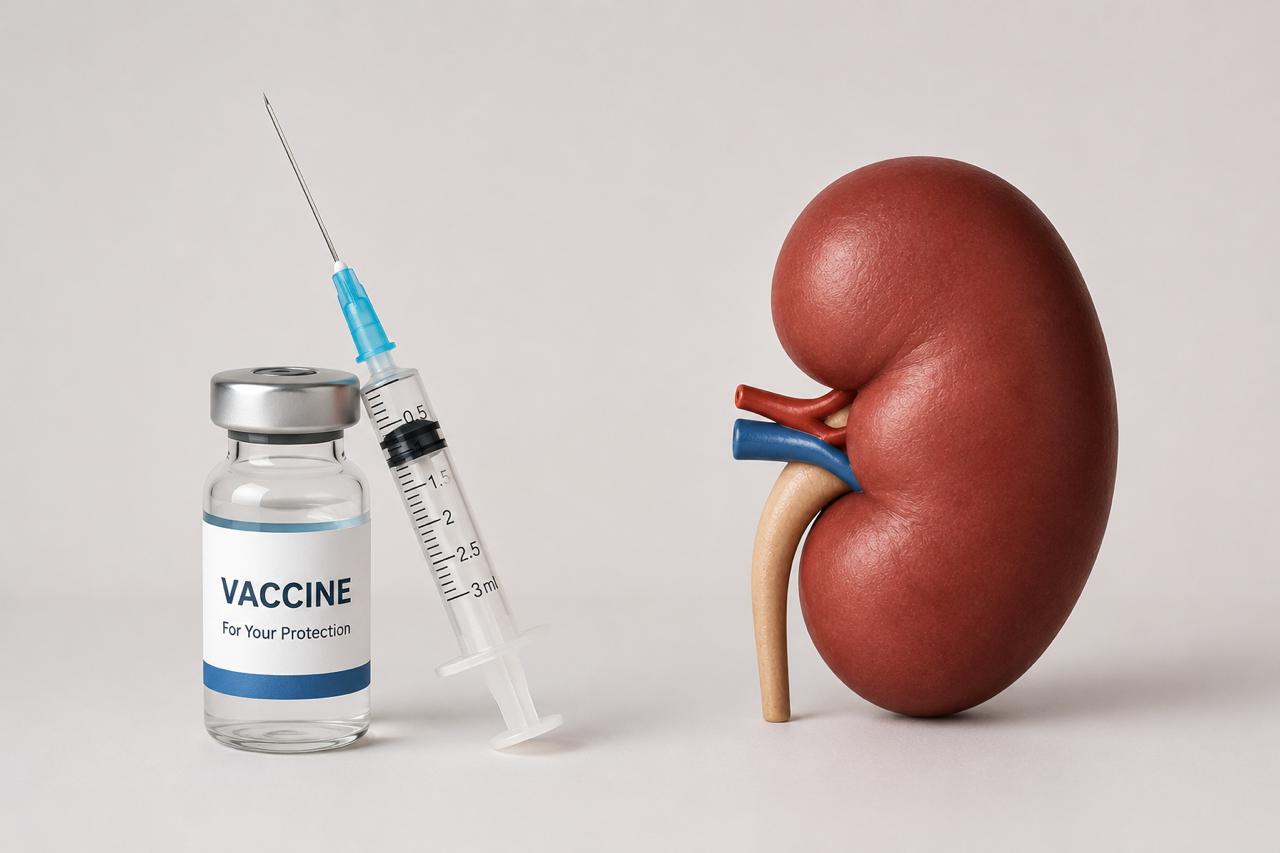
If your father or mother has kidney disease, one question you should ask is…
“Could this happen to me?”
The answer is yes, espicially if your father has diabetes or hypertension .
your risk is higher than someone without a family history. It doesn’t mean you will definitely develop kidney disease—but it does mean you should be more careful.
The good news is that kidney disease can often be detected years before symptoms appear.
So, what should you do?
If you’re over the age of 30, or 10 years younger than the age at which your parent developed kidney disease—especially if the cause was hereditary—you should start getting screened regularly.
What should you do if kidney disease runs in your family?
The tests are simple:
A blood test to check kidney function (creatinine and eGFR).
The tests are simple
A urine test to look for protein or albumin leakage.
A blood pressure check.
A blood sugar test to look for diabetes.
If all your tests are normal, repeat them every year. It takes just a few minutes but can prevent years of suffering.
There are also things you can do every day to reduce your risk.
Maintain a healthy weight. Exercise regularly. Don’t smoke. Eat less salt. Drink adequate water. Keep your blood pressure and blood sugar under control. Avoid unnecessary painkillers and unproven herbal medicines.
How can you reduce your risk?
And if more than one family member has kidney disease, or someone developed kidney failure at a young age, speak to a nephrologist. Some kidney diseases are inherited and may require additional evaluation or genetic testing.
Remember this…
A family history is not your destiny. It is simply a warning sign.
Remember
Knowing your risk early gives you the opportunity to protect your kidneys long before they become damaged.
Don’t wait for symptoms. Check your kidneys while they are still healthy.
More Blogs

23 August, 2026
What Should Your Blood Pressure Target Be?
One of the most common questions I hear is, “Doctor, my blood pressure is 135/85. Is that good or bad?” The answer is… It depends…

23 August, 2026
Is Kidney Disease a Death Sentence?
One of the biggest myths about kidney disease is that it is a death sentence. It isn’t. It is a wake-up call. The kidneys are…